Is It Replacing Marketers or Redefining Their Role?
Just a few years ago, conversations about artificial intelligence in marketing were dominated by fear, concern and uncertainty.
Some of the most common questions were:
- Would AI replace copywriters?
- Would marketers become obsolete?
- Would machines take over creative work altogether?
Fast forward to 2026, and the reality looks very different.
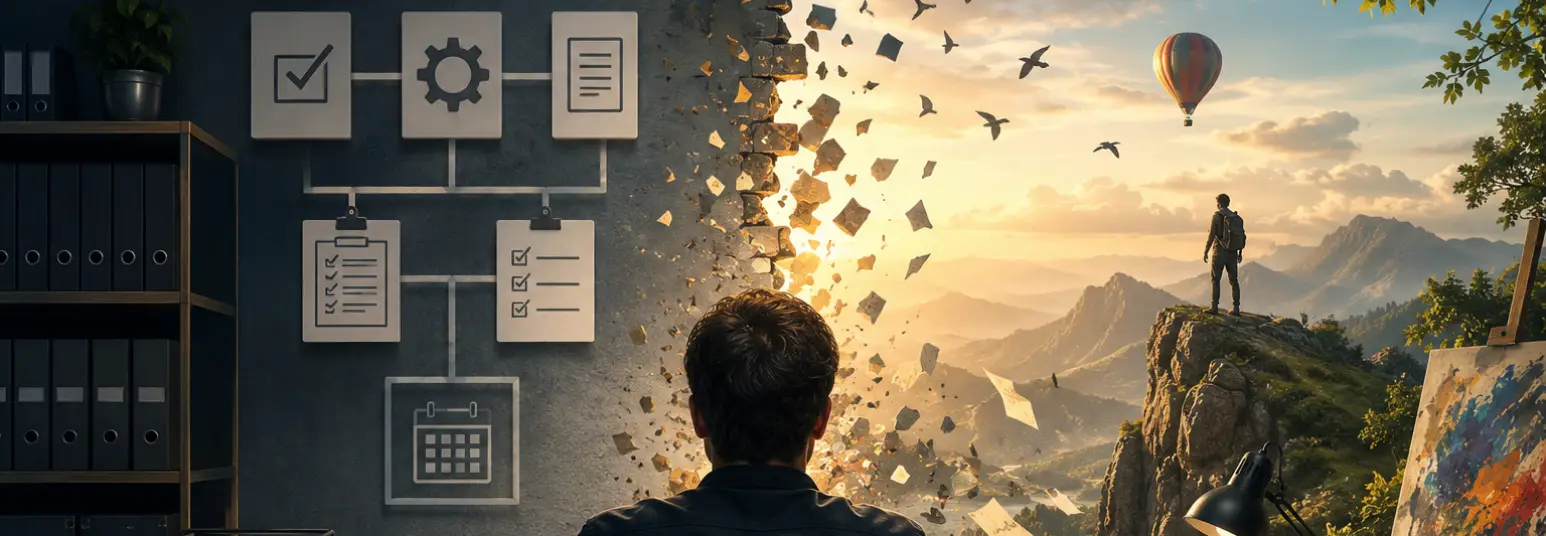
While AI is still evolving at a rapid pace, it hasn’t replaced marketing teams. Instead, it’s transforming how we work, collaborate and deliver campaigns.
While adapting to new ways of working can create fear, many marketing organisations are already seeing the benefits of embracing AI. By adopting these tools, marketing teams are finding smarter ways to work. By using AI, many marketers are able to uncover valuable insights at a quicker speed and spend more time on strategic and creative work.
In fact, some of the most successful marketing teams aren’t using AI to reduce headcount. They’re using it to automate repetitive tasks, streamline workflows and free up their employers’ time to focus on higher-value workloads that drive more meaningful results.
Perhaps the biggest surprise is that AI is making skilled copywriters even more valuable. Rather than replacing writers, AI helps to accelerate research, brainstorm ideas and assist in content production. This allows them to focus on the areas where human expertise still shines: strategic planning, creativity, emotion, storytelling and persuasion.
Now, the question is no longer whether AI has a place in marketing.
The real question is:
How can marketing teams use AI to become more effective, more creative and more customer-focused?
The End of Marketing Admin?
Let’s be honest.
Most marketers didn’t choose this profession because they enjoy spending hours compiling reports, updating spreadsheets or reworking the same piece of content for multiple channels.
Yet, for years, a significant portion of the working week was spent doing exactly that.
Today, AI is changing the picture.
Many marketing teams are now using AI to support tasks such as:
- Producing first drafts of content.
- Creating social media variations.
- Summarising campaign performance.
- Carrying out keyword research.
- Organising customer data.
- Producing reports and dashboards.
Tasks that once took hours can now be completed in minutes.
That doesn’t mean marketers are working less.
It means they’re able to focus their time and energy on higher-value activities.
By leveraging AI tools to handle routine tasks and streamline workflows, marketing teams can devote more time to what matters most: developing strategy, crafting creative campaigns and creating meaningful customer experiences.
And that’s where the greatest opportunities lie.
AI Is Becoming Every Marketer’s Virtual Assistant
One of the simplest ways to think about AI is as a highly capable assistant.
It doesn’t replace expertise, first-hand experience or human creativity; instead, it supports marketers by handling routine tasks, allowing them to focus on work that requires critical thinking, storytelling and strategic insight.
The use of AI tools enables marketers to process information more quickly, identify patterns and generate ideas at a scale that would have seemed impossible only a few years ago.
Many marketing teams are utilising AI tools to support three key areas.
Content Creation
AI can assist with:
- Generating content ideas.
- Building article structures.
- Drafting emails.
- Repurposing content for different channels.
- Creating social media copy.
Rather than staring at a blank screen, marketers can begin with a strong foundation and focus on refining the message.
Data Analysis
Modern marketing produces vast amounts of data.
The challenge isn’t collecting information anymore.
It’s understanding what matters.
AI helps by:
- Identifying trends.
- Highlighting unusual activity.
- Forecasting performance.
- Summarising key findings.
This allows teams to make faster, more informed decisions.
Customer Insights
Understanding customers has always been at the heart of effective marketing.
AI tools are helping teams analyse customer feedback, identify buying signals and uncover behavioural patterns that may otherwise be missed.
These insights help marketers better understand what their audience wants, allowing them to create more relevant and engaging content.
The Most Valuable Marketing Skill Has Changed
Here’s something that surprises many people.
As AI becomes better at generating content, the value of simply producing content is beginning to decline.
What becomes more valuable instead?
- Strategic thinking.
- AI can draft an email.
- It can create a blog outline.
- It can suggest headlines.
But it can’t truly understand your organisation’s goals, your brand positioning or the emotional drivers behind customer decisions.
The marketers thriving in 2026 are strengthening skills such as:
- Strategic planning.
- Critical thinking.
- Customer psychology.
- Brand storytelling.
- Creative problem-solving.
- Decision-making.
In other words, they’re focusing on the areas where human judgement still makes the difference.
AI can provide generic answers.
But a human touch is what will make the content resonate with clients.
Personalisation Is Reaching a New Level
Customers today expect more relevant experiences.
Generic messaging is becoming increasingly easy to ignore.
That’s why personalisation remains one of the biggest opportunities for marketing teams.
AI is making it possible to deliver more relevant experiences by helping organisations:
- Tailor content to specific audiences.
- Deliver personalised recommendations.
- Adapt messaging based on customer behaviour.
- Improve customer journeys across multiple touchpoints.
The objective isn’t simply to create more content.
It’s to create content that feels timely, relevant and useful.
We know that when customers feel understood, engagement increases and relationships flourish.
And when engagement increases, companies often see better results.
The Biggest Risk? Sounding Like Everyone Else
While AI presents enormous opportunities, it also creates a challenge.
As more businesses use the same tools, there’s a growing risk that marketing content starts to sound remarkably similar.
We’ve all come across it.
Posts that feel generic.
Articles with little personality.
Content that is technically correct but feels instantly forgettable.
This is where human creativity becomes a genuine competitive advantage.
When creating marketing content, the ability to differentiate your brand through a unique tone of voice, perspective and personality is what drives consumer engagement and growth.
In this evolving landscape, the brands that stand out will be those that combine the efficiency of AI with authentic human insight.
People form genuine connections with:
- Real stories.
- Fresh perspectives.
- Personal experiences.
- Original thinking.
Technology can help deliver the message.
But authenticity is what captures attention and encourages people to engage.
Adding a human touch and an emotional narrative makes content more relatable, memorable and persuasive.
The Future Belongs to Human + AI Teams
The most successful marketing teams in 2026 aren’t choosing between humans and AI.
They’re finding ways to combine the strengths of both and utilise them to become more efficient and effective.
AI brings speed, scale and analytical capability.
Marketers bring the creativity, empathy, judgement and vision that only humans can provide.
Together, this creates a powerful combination that, when utilised effectively, can produce impactful marketing strategies and campaigns.
Organisations embracing this approach are discovering new ways to innovate, strengthen customer relationships and drive growth.
Now that you have read this article, a question worth asking:
Instead of asking:
“Will AI replace marketers?”
Perhaps the better question is:
“How can AI help marketers focus on the work that humans do best?”
Because the future of marketing isn’t about replacing people.
It’s about empowering them.
And for marketing teams willing to adapt, that future looks incredibly exciting.
At Fortunate Media, we help businesses grow by blending performance marketing, strategic thinking, and creative storytelling. Whether you’re building a brand, scaling your reach, or launching a campaign — we’re here to help you do it with impact. Let us help you, and get in touch with us today!